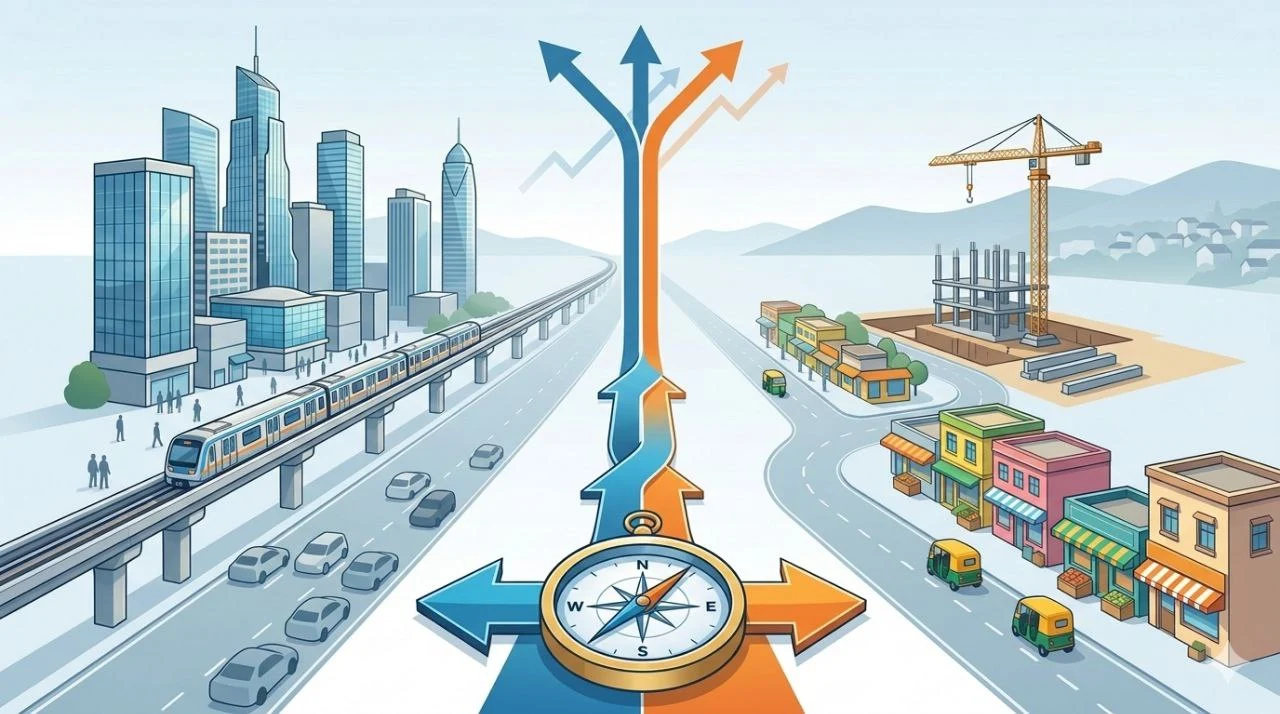
Metro vs Tier 2/3: Where
Should Companies Expand First?
India’s
consumption landscape is entering a geographically distributed growth phase
between 2026 and 2030. While metropolitan regions continue to offer strong
purchasing power and mature ecosystems, Tier 2 and Tier 3 cities are emerging
as powerful expansion engines, driven by rising disposable income, deeper
digital penetration, and increasingly aspirational consumers.
For
industry leaders, choosing between a metro-first strategy and Tier market
expansion is no longer a marketing decision. It is a structural strategic
choice that directly influences customer acquisition cost (CAC), unit
economics, and long-term scalability.
Recent
market analyses indicate that a majority of incremental internet users and new
digital commerce adopters are emerging from non-metro regions. As competition
intensifies in metros and demand accelerates in emerging cities, companies are
being compelled to reassess their geographic expansion strategies through a
more data-driven lens—making geographic prioritisation a critical component
of an effective
India GTM strategy.Metro-First Strategy:
Validation and Brand Equity
Metros
remain valuable for early product validation and brand establishment. High
population density, stronger purchasing power, and mature digital ecosystems
enable faster feedback loops and quicker product-market fit.
For
innovation-led or premium categories, metros serve as ideal launch markets,
offering access to early adopters and higher average revenue per user (ARPU).
However,
metros also face rising customer acquisition costs and intense competitive
saturation. Paid digital channels, influencer marketing, and platform
advertising costs continue to inflate, often compressing margins during early
growth phases.
As
a result, many companies increasingly treat metro launches as validation
engines for credibility and brand signalling, rather than the primary driver of
long-term scale.
Tier 2/3 Markets: The
New Scale Engine
Tier
2 and Tier 3 cities are demonstrating accelerated consumption growth, supported
by expanding middle-income households and improving digital infrastructure.
Smartphone
adoption, digital payments, and stronger logistics networks have transformed
these markets into fully addressable digital economies.
Companies
entering Tier markets often benefit from:
- Lower
customer acquisition costs
-
Lower competitive intensity
-
Higher organic adoption through community influence
-
Stronger long-term customer loyalty
For
value-driven platforms and repeat-consumption categories, Tier markets are
increasingly becoming scale accelerators for volume-led growth.
Industry
projections suggest that a significant share of incremental demand across
e-commerce, fintech, mobility, and digital services by 2030 will originate from
Tier 2 and Tier 3 regions.
Hybrid Sequencing: The
Emerging Strategic Consensus
A
hybrid geographic sequencing model is gaining traction across high-growth
sectors. This strategy combines metro launches for validation and brand
positioning with rapid Tier expansion for scalable growth and cost
optimization.
Hybrid
sequencing enables firms to balance brand credibility, operational efficiency,
and market penetration without over-reliance on a single geography.
Differential
pricing strategies, localised distribution models, and region-specific customer
engagement frameworks further enable organisations to adapt their value
propositions across diverse markets. As India’s consumption ecosystem becomes
increasingly heterogeneous, hybrid approaches are evolving into standard market
entry playbooks for growth-stage companies and multinational entrants.
Key Strategic Decision
Drivers for Industry Professionals
Geographic
launch decisions are influenced by multiple structural variables, including
pricing architecture, supply chain flexibility, category maturity, and funding
priorities.
Premium
products with higher margins may benefit from metro launches due to stronger
purchasing power and brand signalling advantages.
Conversely,
value-oriented platforms with scalable business models often achieve stronger
performance metrics in Tier 2 and Tier 3 markets through improved capital
efficiency and lower CAC.
Investor
expectations and growth timelines also shape geographic prioritisation.
Organisations seeking rapid revenue visibility may prioritise metros, whereas
firms focused on long-term profitability and scalable adoption may emphasise
Tier expansion.
Capturing
the voice of customer across different city tiers is therefore critical,
as consumer motivations, trust signals, and purchasing triggers can vary
significantly between metro and emerging markets.
Sectoral Implications
and Growth Outlook (2026–2030)
Between
2026 and 2030, multiple sectors are expected to experience pronounced Tier
market expansion.
Fintech
adoption is projected to deepen as financial inclusion initiatives accelerate
and digital payment ecosystems mature. E-commerce platforms are already
reporting higher order volumes from Tier regions, supported by logistics
infrastructure improvements and faster delivery networks.
Similarly,
mobility platforms, electric vehicle adoption, digital healthcare, and edtech
solutions are expanding beyond metropolitan clusters.
These
trends indicate that geographic diversification will become a defining
determinant of market leadership. Companies capable of aligning distribution
strategy, pricing models, and customer engagement with regional consumption
dynamics are likely to achieve stronger competitive positioning.
Execution Risks and
Operational Realities
Metro
launches benefit from stronger operational infrastructure, mature logistics,
and skilled talent pools, enabling faster execution and scalable growth.
Tier
2/3 markets, however, may present challenges in distribution efficiency,
regional demand variability, and service consistency, requiring deeper
localization and partnership-driven supply chain models.
Brand
adoption dynamics also differ significantly across regions. Metro consumers
respond well to digital-first strategies, while Tier markets often demand
trust-building through offline engagement and localized communication.
Aligning
market localization strategy with scalable operations is therefore essential
for sustainable expansion success.
Questions Industry
Leaders Are Asking
As
companies rethink geographic expansion strategies, several recurring questions
are shaping industry discussions:
- Should
startups launch in metros first or scale directly in Tier 2/3 markets?
-
How do customer acquisition costs differ across metro and non-metro regions?
-
Which sectors scale fastest in emerging cities?
-
Can premium brands succeed beyond metropolitan markets?
-
How should pricing and distribution models adapt across city tiers?
These
questions reflect the broader transformation underway in India’s consumption
landscape.
Conclusion
The
metro-first versus Tier 2/3 launch debate reflects a broader transformation in
India’s economic geography. Metros continue to serve as critical hubs for
innovation validation, premium positioning, and ecosystem leverage, while Tier
markets are emerging as powerful drivers of scalability, capital efficiency,
and distributed demand growth. For
industry professionals, the optimal approach lies in adopting a sequenced and
data-driven expansion strategy that integrates metro validation with Tier
scalability.
As
India’s consumption landscape evolves through 2030, geographic strategy will
increasingly function as a strategic differentiator influencing competitive
advantage, profitability, and long-term market leadership. Organisations that effectively combine market-entry strategy, unit-economics optimisation,
and geographic diversification will be best positioned to capture India’s next
growth cycle and sustain momentum in an increasingly competitive environment.